Free worldwide shipping on orders over £30

Multicoloured play of colour Crystal · Crown & Heart Chakra

Opal

A mesmerising stone of inspiration that amplifies emotions, sparks creativity and reveals inner truth.

£12.99£21.99

With free worldwide shipping

Quality Guaranteed
Secure Checkout
Authenticity Guaranteed
30-Day Returns

Crown & Heart Chakra

creativity, intuition

Multicoloured play of colour

Libra, Scorpio, Cancer

19 shapes available

Shop Opal

Browse genuine opal with free worldwide shipping

Quality Guaranteed
Secure Checkout
Authenticity Guaranteed
30-Day Returns

Free shipping on orders over £30.00

3 products
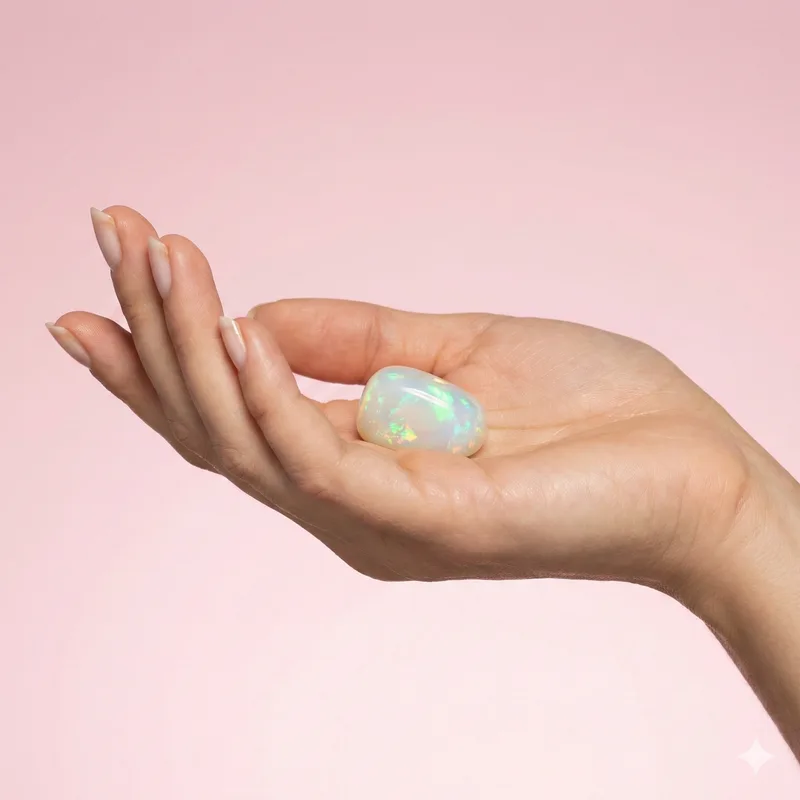
Opal Tumbled Stone - opal crystal
opal
tumbled
Opal Tumbled Stone
£12.99
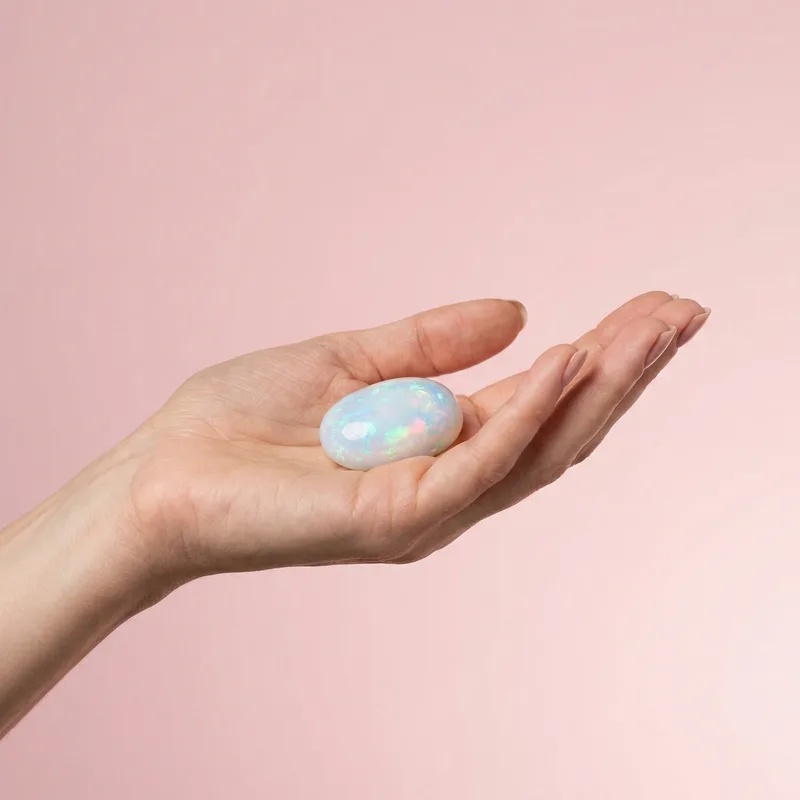
Opal Palm Stone - opal crystal
opal
palm stone
Opal Palm Stone
£16.99
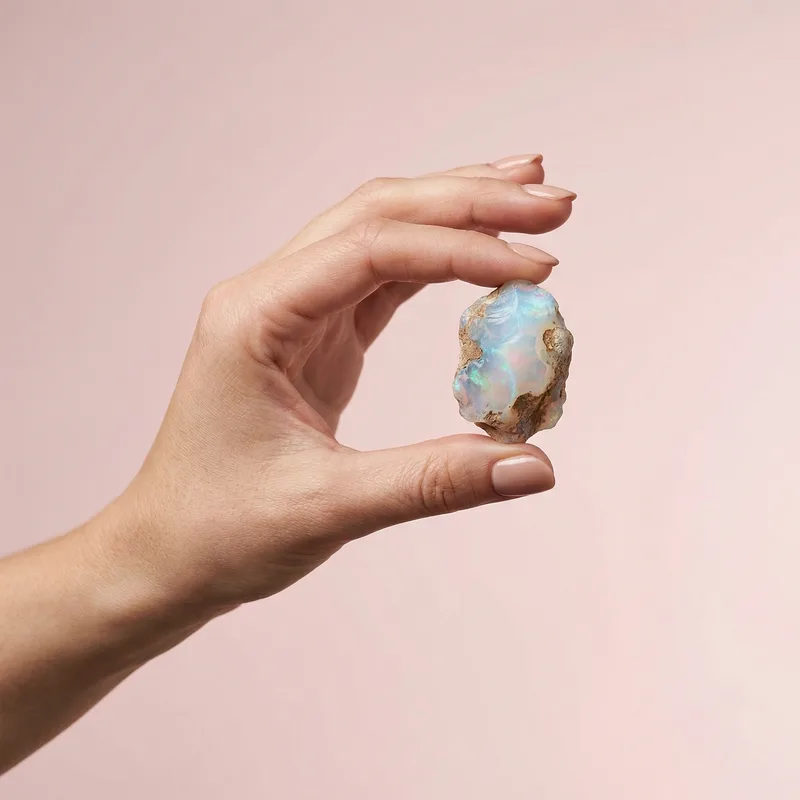
Opal Raw Piece - opal crystal
opal
raw
Opal Raw Piece
£21.99
AMEXPayGPay

Secure payments accepted

Opal Crystal Guide

Everything you need to know about working with opal — from healing properties to geology.

Opal is a stone of pure inspiration and amplified emotion, containing the full spectrum of light within its mesmerising play of colour that shifts and dances with every movement. It is a deeply creative stone that enhances imagination, originality and spontaneity, making it a favourite among artists, writers and anyone seeking to break free from conventional thinking. Opal also acts emotional mirror, amplifying your current feelings and bringing hidden truths to the surface for healing and understanding.
Opal is the stone of creative inspiration and amplified emotion, containing the full spectrum of light within its kaleidoscopic play of colour. Ancient Romans considered it the most precious gemstone, believing it encompassed the beauty of all other stones. Opal symbolises the richness of a life lived with emotional honesty and creative courage, reminding us that our feelings — even the uncomfortable ones — are the palette from which our most authentic and beautiful creations emerge.
Opal is believed to support the eyes, improve vision and strengthen the immune system through its high water content and light-enhancing properties. It is particularly valued for its ability to regulate emotions, ease PMS symptoms and support women through the hormonal changes of pregnancy and menopause. Crystal healers use opal to purify the blood and kidneys, ease fevers and infections, and support memory function.
Wear opal when you need creative inspiration or are working on artistic projects to amplify your imagination. Use it in meditation to explore your emotional landscape and gain clarity on feelings you may have been suppressing.
Choose an opal whose play of colour speaks to you, colour flashes correspond to different chakra energies. Be aware that opal is delicate and should be kept away from extreme heat and harsh chemicals.
Opal is a hydrated amorphous form of silica with a water content typically between 3-21%, and its play of colour results from the diffraction of light through microscopic silica spheres. Australia produces over 90% of the world's precious opal, with additional sources in Ethiopia, Mexico and Brazil.

Mohs Hardness

SoftHard

5.5-6.5 on the Mohs scale

Elements

Opal has a Mohs hardness of 5.5–6.5 and contains water within its structure, making it sensitive to dehydration. Brief rinses under lukewarm water are acceptable, but avoid prolonged soaking, saltwater and hot water. For energetic cleansing, moonlight, selenite charging and sage smoke are preferred. Important: opals crack in dry environments and direct sunlight, so store them wrapped in a slightly damp cloth in a cool, stable environment away from heat sources.
Charge opal under the full moon overnight — this is the safest and most effective method. Selenite plates are also suitable. Avoid sunlight and heat which can crack opal's delicate water content. You can charge opal by placing it near (not in) a bowl of water to replenish its moisture energy. Hold it gently and programme it with intentions for creative inspiration and emotional authenticity.
Australia produces approximately 95% of the world's precious opal, with the three main fields being Lightning Ridge in New South Wales (famous for black opal), Coober Pedy in South Australia (the world's opal capital, producing white and crystal opal), and the Mintabie and Andamooka fields. Ethiopian opal from the Wollo Province (discovered commercially around 2008) has rapidly become an important new source, producing vivid play-of-colour material at more accessible prices. Other significant sources include Mexico (the famous fire opal from Querétaro and Jalisco), Brazil (particularly Pedro II in Piauí state), Honduras, and the Czech Republic. The Virgin Valley in Nevada, USA, produces spectacular specimens that are unfortunately prone to crazing (cracking). Opal forms when silica-rich water seeps into cavities and cracks in rock, depositing tiny silica spheres that stack in regular arrays — precious opal's play of colour occurs when these spheres are uniform in size (around 150–400 nanometres) and diffract light. Australian opal mining is well-regulated and primarily artisanal. Ethiopian opal's emergence has been transformative for the market but sourcing transparency varies. Mexican fire opal comes from well-established mining operations.
Opal has one of the most complex cultural histories of any gemstone, inspiring both adoration and superstition. The Romans considered opal the most precious gemstone, combining the beauty of all other stones — Pliny the Elder called it "opallus" and described its "kaleidoscopic fire." Marc Antony allegedly exiled a senator who refused to sell him a magnificent opal. However, opal's reputation took a catastrophic turn with Sir Walter Scott's 1829 novel "Anne of Geierstein," in which an enchanted opal brings death to its wearer. This single novel destroyed opal demand in Europe for nearly 50 years and created superstitions that persist today. Queen Victoria worked to rehabilitate opal's image by giving Australian opals as wedding gifts, and the discovery of enormous Australian deposits in the 1850s eventually restored the stone's popularity. In Australian Aboriginal Dreamtime mythology, the Creator came to earth on a rainbow, and where his feet touched the ground, the stones came alive with colour — creating opal. In Indian Vedic tradition, opal represents the cosmic fire. In the Middle East, opal was believed to have fallen from heaven in lightning flashes. In modern culture, opal is Australia's national gemstone and the October birthstone. Ethiopian opal's recent emergence has created a new chapter in opal's ongoing cultural evolution.
Opal is associated with Libra (23 September – 22 October) as the traditional October birthstone, and with Cancer (21 June – 22 July) and Pisces (19 February – 20 March). For Libra, opal's play of colour — harmoniously blending multiple hues in one stone — mirrors the sign's quest for beauty and balance. For Cancer, opal resonates with emotional depth and intuitive sensitivity. For Pisces, the stone enhances spiritual awareness and creative imagination. Opal also benefits Scorpio (23 October – 21 November), another October sign, supporting transformation and emotional depth. Due to its high water content, opal naturally aligns with water signs and with anyone going through emotionally sensitive periods. Different opal varieties have specific associations: fire opal for Aries/Leo (passion), black opal for Scorpio (depth), white opal for Cancer (intuition), and boulder opal for Capricorn (endurance).
Opal works with multiple chakras depending on its variety. White or crystal opal works with the Crown Chakra (Sahasrara), enhancing spiritual awareness and connection to higher consciousness. Black opal activates the Root Chakra (Muladhara) and Third Eye (Ajna), grounding spiritual vision. Fire opal stimulates the Sacral (Svadhisthana) and Solar Plexus (Manipura) Chakras, activating passion and creative power. Boulder opal bridges the Root and Crown, connecting earth energy to spiritual awareness. All opals share a connection to the Sacral Chakra due to their high water content — water being the element of the Sacral Chakra, which governs emotions and fluidity. To work with opal in chakra practice, choose the variety that matches your intended chakra. Place it at the appropriate centre and focus on the flowing, iridescent quality of opal's energy. Opal amplifies emotions and psychic impressions, so it's best used during periods of emotional stability rather than crisis.

Use these affirmations while holding or wearing Opal to deepen your connection with its energy. Repeat each one slowly, feeling its resonance within you.

“I am a vessel of pure creative inspiration”
“I embrace the full spectrum of my emotions with love”
“I am open to the beauty and wonder of the universe”
“My imagination flows freely and my ideas come to life”
“I trust my inner vision and honour my unique perspective”
“I am connected to the divine spark of creation within me”
“I release inhibitions and express my authentic self joyfully”
“Love flows through me and illuminates everything I touch”

Adorn Yourself

Opal Jewellery

Discover beautiful opal necklaces, bracelets, rings and earrings from expert artisans

Browse Opal Jewellery

H

Hanna Jakab

Expert

Crystal Healing Practitioner · Gemstone Specialist · Founder

Founder of Age Of Crystals and practising crystal healer with over a decade of experience sourcing ethically mined gemstones. Hanna personally inspects every stone that enters the collection.

Reviewed by Philip Speidel — Product & Marketing Specialist

Opal FAQs

Common questions about opal

Opal is a mesmerising stone of inspiration that contains the full spectrum of light within its play of colour. It amplifies emotions, sparks creativity and reveals inner truth through its ever-shifting iridescence.

Opal amplifies emotions for healing awareness, sparks creativity and imagination, enhances spontaneity and originality, reveals hidden truths and suppressed feelings, and supports eye health in holistic practice.

Wear opal when you need creative inspiration or are working on artistic projects. Meditate with it to explore your emotional landscape. Place it in your creative workspace for ongoing inspiration and imaginative stimulation.

Opal resonates with the Crown chakra for spiritual connection and the Heart chakra for emotional amplification. Its multicoloured play of light means it can stimulate additional chakras depending on its dominant colours.

Cleanse opal with moonlight, gentle smudging, or placing it on a selenite plate. Avoid water, sunlight and sudden temperature changes as opal is delicate and can crack from thermal shock. Handle with exceptional care.

Opal should generally avoid water. While it naturally contains water in its structure, external water exposure can cause cracking, cloudiness or loss of play of colour. Brief, gentle contact is occasionally acceptable but soaking is never recommended.

Opal is the October birthstone and associated with Libra, Scorpio and Cancer. Its emotionally amplifying, creative energy resonates with Libra's aesthetic sensibility and Scorpio's emotional depth.

Genuine opal displays a natural play of colour that shifts and moves as you tilt the stone. The colour patches should be irregular and varied. Synthetic opals have more uniform, grid-like colour patterns. Side-on viewing often reveals layering in doublets and triplets.

Opal can enhance dream vividness and emotional processing during sleep. However, its amplifying nature may intensify emotions, so use cautiously if you are already experiencing emotional upheaval. Pair with calming amethyst for balanced sleep support.

Opal pairs well with Moonstone for amplified intuition and feminine energy, Labradorite for magical transformation, Clear Quartz for enhanced creative vision, and Amethyst for balanced emotional and spiritual exploration.

Quality Guaranteed

Secure Payments

Genuine Crystals

Free 30-Day Returns

Shop Opal — From £12.99

Your Cart

Your cart is empty.